
Trailer Jacks
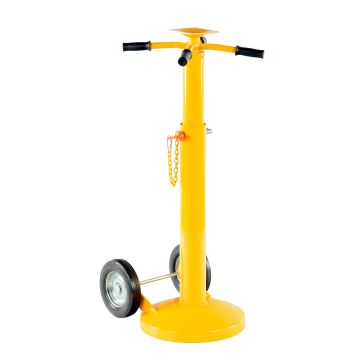
Loading dock operations need stable platforms for forklift operation and material handling. Trailer jacks and trailer stabilizing jacks prevent trailer movement during loading and unloading, no accidents from shifting or rocking trailers. These devices create a stable base for safe dock operations.
Trailer stabilizer jacks come in different designs to accommodate different operational needs. Hydraulic trailer jacks are easy to operate and precise, good for high-volume facilities where speed and ease of use are key to productivity. Semi-trailer jack units are built for heavy commercial vehicle applications.
Different jack types serve specific operational needs. Trailer rear support jacks provide additional stability for operations requiring maximum steadiness. Heavy-duty trailer stabilizer jacks can handle fully loaded trailers without compromising stability. Tractor-trailer jack systems often have multiple units for optimal load distribution and stability.
Ratchet beam trailer jack designs are reliable and cost-effective for many applications. These manual systems have great control without hydraulic or electrical power, good for places where simplicity and reliability matter more than speed. Mechanical advantage systems make operation manageable even with substantial loads.
Frequently Asked Questions:
1. What are the different types of trailer jacks used in industrial applications?
Hydraulic jacks provide powered operation with smooth, effortless control. Manual screw jacks use hand-cranked operation for cost-effective solutions. Pneumatic jacks utilize air power for consistent operation. Ratchet beam jacks employ a mechanical advantage for manageable manual operation. Each type offers different load capacities, operating speeds, and power requirements based on operational needs.
2. What is the difference between a trailer jack and a trailer stand?
Trailer jacks actively lift and support trailers during loading operations, providing adjustable height and operational stability. Trailer stands provide fixed support for long-term storage or maintenance of unhitched trailers. Jack’s function as an operational tool for active dock work, while stands serve primarily static support applications.
3. How many trailer jacks are typically needed for safe trailer stabilization?
Most operations require a minimum of two jacks positioned at the rear trailer corners for basic stabilization. Longer trailers or heavy loads may need four jacks positioned at the front and rear locations. Some operations use three jacks in triangular configurations. Requirements depend on trailer length, load distribution, and specific safety standards at each facility.
4. What weight capacity should I consider when choosing a trailer jack for my loading dock?
Base capacity selection on maximum loaded trailer weights handled at the facility, then add a safety margin of 25-50% above expected loads. Consider dynamic loads created by forklift operations and potential uneven load distribution. Account for the combined capacity when multiple jacks work together to support single trailers.
5. What safety standards or regulations apply to the use of trailer jacks at loading docks?
OSHA requires proper trailer restraints during loading operations to prevent movement. While specific equipment isn't always mandated, facilities must implement measures to prevent trailer movement during dock operations. Industry best practices recommend trailer stabilization for enhanced safety. Local regulations may impose additional requirements, so checking with safety experts and local authorities ensures compliance.