
Spill Response Kits
Unplanned spills happen quickly, and the cost of being unprepared goes beyond cleanup. Whether a hydraulic line fails on the floor or a chemical drum tips during transfer, having the right spill response kits positioned and stocked separates a contained incident from a costly regulatory or safety event.
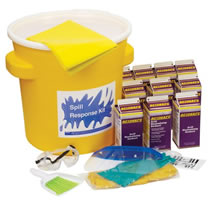
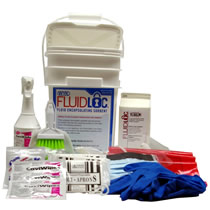
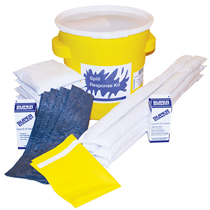
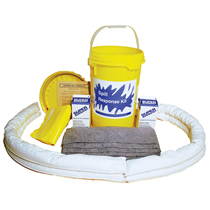
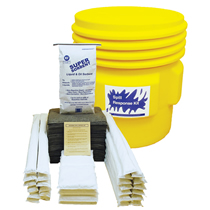
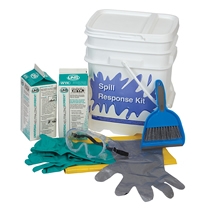
In cases where there are many different fluids being managed, it becomes clear that there is no blanket solution that works for everything. Spill kits designed for general purposes will address normal problems such as coolant leaks and water, which will be adequate for warehouses and maintenance garages. Oil selective response kits will make use of hydrophobic absorbents for dealing with petroleum-based fluids. Where corrosives are involved, acid spill response kits bring neutralizing agents alongside chemical-resistant absorbent pads and pillows and appropriate PPE.
Using standard absorbents on an acid spill is not just ineffective but also dangerous. For unpredictable environments, universal chemical hazmat kits offer broad chemical resistance and PPE for unknowns. Bodily fluid response kits serve healthcare and laboratory settings where infectious material requires specific containment. Specialty spill kits cover needs outside standard classifications.
Effective industrial spill response kits should be placed at the point of risk, not stored in a distant cabinet. Distributed placement and regular restocking keep emergency spill response kits functional. Audit of your absorbency needs, proper functioning of PPEs, and usage of suitable disposal bags is equally important as choosing a suitable spill kit. Properly selected and maintained spill cleanup kits keep you and your property safe from spills.
FAQ’s:
1. How can I figure out what size kit will fit my needs?
Consider the largest vessel or the amount of liquid held in one place. Your kit should have a capacity that matches or exceeds the worst-case volume for that location.
2. Are oil-only absorbents compatible in rainy conditions?
Yes, because oil-only materials are manufactured to be hydrophobic and will therefore repel water but only soak up oil.
3. How does a universal kit differ from a hazmat kit?
Both kits cover all kinds of liquids. Hazmat kits undergo extra testing for chemicals that break down standard absorbent pads, like highly concentrated acids and bases.
4. How frequently should I inspect spill kits?
Spill kits should be checked monthly to ensure seals are intact and absorbent materials and pillows are uncontaminated and undamaged.