

Spill Pallets
The difficulty in contemporary industrial facilities is dealing with hazardous liquids without disrupting their activities or breaching any rules concerning environmental safety. A simple leakage from a single drum may cause a very slippery catastrophe, incur hefty fines, or even produce an explosion within the entire floor surface. Spill containment pallets act as your first line of defense in this situation, turning your risky storage area into a fully compliant workplace.
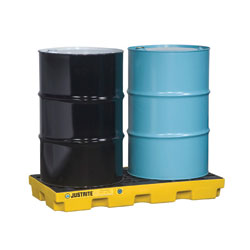
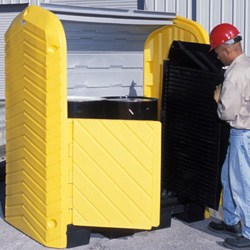
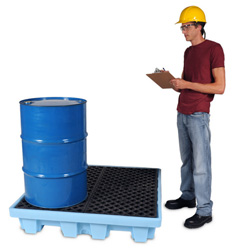
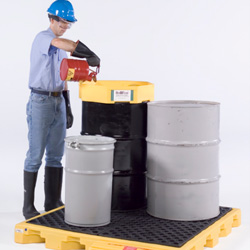
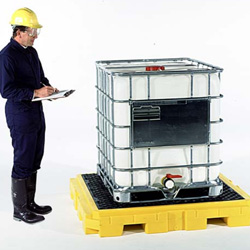
Choosing the correct secondary containment is an issue of business continuity. Spill pallets made of high-density polyethylene provide the strength necessary for dealing with corrosives and heavy drum loads. For choosing between accumulation centers and drum spill containment pallets, capacity is a key consideration when determining the maximum size container being used.
This helps in capturing any possible leak in the tank system, thereby limiting its impact to the integrated reservoir, not allowing it to spread out on the floor. Hard-top spill pallets are a must when storing chemicals outside, as they stop the rain from collecting in the sump and provide a locked barrier against any unauthorized access to the facility. The applicability of chemical spill pallets comes in handy during handling operations since most are provided with a forklift pocket to enable transportation of filled drums. In cases where there is a need for high dispensing frequency, low-profile spill decks can be utilized to ensure working at reasonable heights.
FAQ’s:
1. What is the primary difference between a spill deck and a spill pallet?
The spill pallet is higher in height to accommodate more sump space, while the spill deck is lower to allow easy loading and cover the floor modularly.
2. How do I determine if my containment meets EPA requirements?
Regulations usually require that the containment either store 10% of the combined volume or the complete volume of the largest single storage tank.
3. Can these be used for flammable liquids?
The polyethylene pallets provide excellent protection, but grounding must be done during dispensing in order to avoid any static electricity.
4. Is maintenance required for the sumps?
Maintenance would be needed to keep the sumps dry; once a leak is spotted, it must be removed right away in order to ensure the rated capacity remains intact.