


Introduction
Ladders and stepladders are wonderful tools to reach and access height at various worksites, warehouses, stores, and renovation sites, as well as access overhead storages of homes. At homes, it simplifies access to spaces like attics without permanent stairways and is essential for worksites where it often requires reaching at height for various maintenance and installation works. However, it has some safety concerns if not used correctly, so here are some safe ladder best practices tips to take into consideration while using. These precautions make workplace ladder safety a usual norm for a safer workplace.Ladder Safety Best Practices
Let’s discuss the safety measures and best practices for using different types of ladders and follow them to promote workplace safety and enjoy a safer working environment. This will enable the workforce or individual to learn, understand, and avoid unstable footing, overreaching, improper placement of ladders, inadequate maintenance, and other mistakes.Choose Correct Ladder
The first thing to be considered is to find the correct and appropriate ladder based on the type, built material, weight, size, load and duty rating, and utility. There are different types of ladders available with different functions and uses; for instance, stepladders are useful for light or medium duty in domestic home uses or stores, whereas platform ladders or extension ladders are commonly used by warehouses or commercial premises. It is crucial to consider the weight of the individual, tools, and material to climb on a ladder, as it should match its load-bearing capacity. A lightweight aluminum could be a better option, but for electricity or electrical work, choose a non-conductive material (like a fiberglass ladder) to prevent any accidents.Safety Check before Use
Safety checks before ladder use help prevent any injury or on-the-job fatalities. If the ladder is old, then always follow a periodic thorough inspection to find any damage or repair requirements and get it fixed. Look out for split or bent side rails, steps, broken or loose rungs, and loose hinges, screws, bolts, and other parts in good condition or not. A new ladder might not have such structural damages yet, so check out the possible defects and missing parts. Make it a practice to always ensure the right form and damage-free ladder before use. Keep it in a clean and dry space to minimize the wear and tear.Ensure Physical Capability and Safety While Climbing
An individual’s physical capability that is going to climb and pursue the task is essential to be considered. It includes weight, grip strength, walking speed, standing balance time, holding tools or equipment, and more. Whether climbing up for the first time or a number of times, always stay cautious and follow basic personal safety tips like keep a firm grip, face toward the ladder, keep a hand free, use a material lift or rope to get the tool or material up in the work area, and avoid unnecessary or excess reach and compromise safety. One can pick an exclusively available step stool with utility tray, so stay worry-free about safely holding the material or paint bucket. While climbing, maintain a ‘three-point contact’; either one foot and two hands or one hand and two feet on the ladder. It helps to ensure a firm grip and careful step while climbing up or down.Stable and Flat Surface Around Safe Area
Safety comes first while using a ladder, so it’s always good to be careful while placing the ladder on a surface. It should be placed on a stable, not slippery, firm, and flat surface to give stability while using it for any task. Always make sure the surface is capable with enough load-bearing capability, including the ladder, individual, and material or tool. The ladder should be set up in a safe area without any clutter or obstruction around it. In case it needs to be placed or set up in the under-construction space, driveway, passage, barrier, or signage, then make sure a person is present for assistance and support. Make sure to secure the ladder from movement while working or transitioning from the ladder to another surface.Avoid Leaning to Reach Away
Ladders usually have less area to move, so while using a ladder or standing on a step, avoid leaning and reaching away. It increases the risk of falling off as unnecessary movement could make the ladder unstable. Safely climb down and move the ladder to reach rather than leaning.Always Carry Small Tools or Equipment
It is risky to carry heavy objects, materials, or tools while climbing up or down on a ladder. The total weight, including the person and object, shouldn’t cross the load rating capacity. Anything heavier or larger may unstable the ladder and the individual working on it may lose three-point contact and fall down. Avoid carrying anything large or huge, and follow the 3-point contact rule for ladder safety practice.Conclusion
Ladder safety and proper workplace ladder safety practices are vital to protect the workforce or individuals from falling off and prevent accidents and injuries. Whether using a ladder at home or at a worksite, always follow these safe ladder practices tips and keep them in mind while training staff or workers. It helps to prevent life-threatening accidents and hazardous events and makes the workplace a safer environment for each individual. Always prioritize safety and make sure everyone adheres to these safety tips while using a ladder and safely executing the task. “Precaution is better than cure” as it helps to mitigate the risk for better productivity.Browse Different Ladder Safety Products:
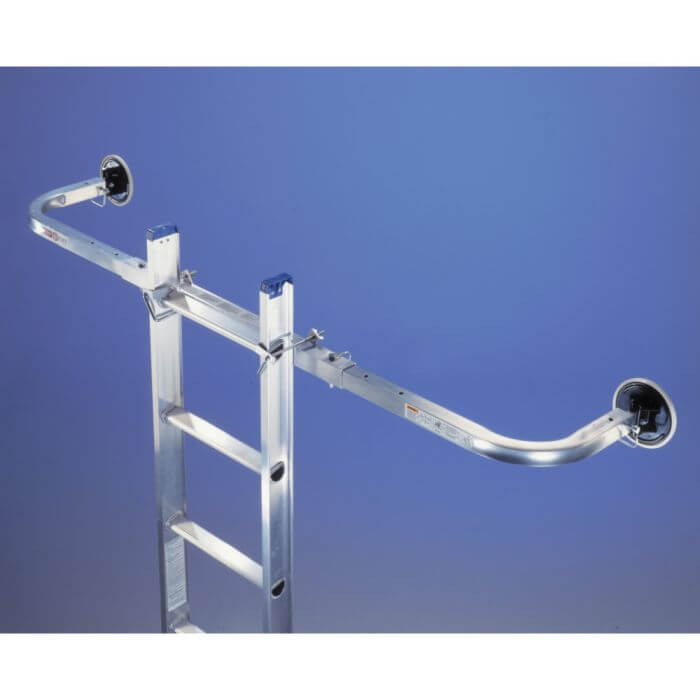
Werner 97P Aluminum Adjustable True Grip Ladder Stabilizer
The Werner 97P Adjustable TRUE GRIP; Stabilizer and Surface Protectors span double windows. Span adjustment: 49", 57" or 65". Stand-off distance 12" or 29 1/2". Quickly converts stand off distance for larger overhangs.
- Span adjustment : 49", 57" or 65"
- Stand-off distance: 12" or 29-1/2"
- Rectangular stabilizer spans double windows
- Quickly converts stand off distance for larger overhangs
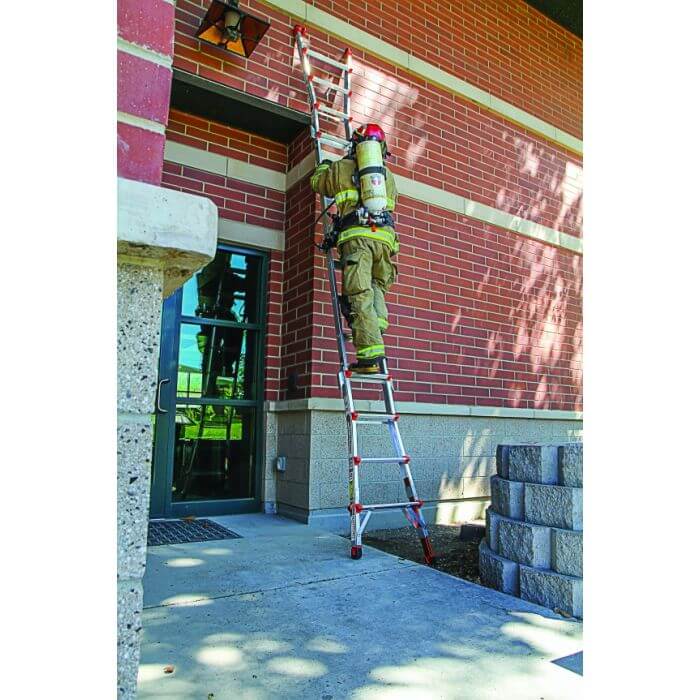
Little Giant Defender Series Multi-Use Ladders
The Little Giant Defender™ was specifically engineered for firefighters who need speed and strength in a rapid-response portable ladder system. The Defender is designed to fit existing storage spaces in most fire engines and is lighter than any comparable industrial-rated ladder. The Defender also includes several innovative new features, such as the Quad-Lock™ hinge and the Rock Locks® rung fasteners for quick, easy adjustment with heavy firefighter gloves.
Benefits:
- Built in tipping, gliding wheels
- Wide-flared extension ladder for improved side-tip stability
- The Defender adapts to almost any situation, offering a safe, stable climbing solution
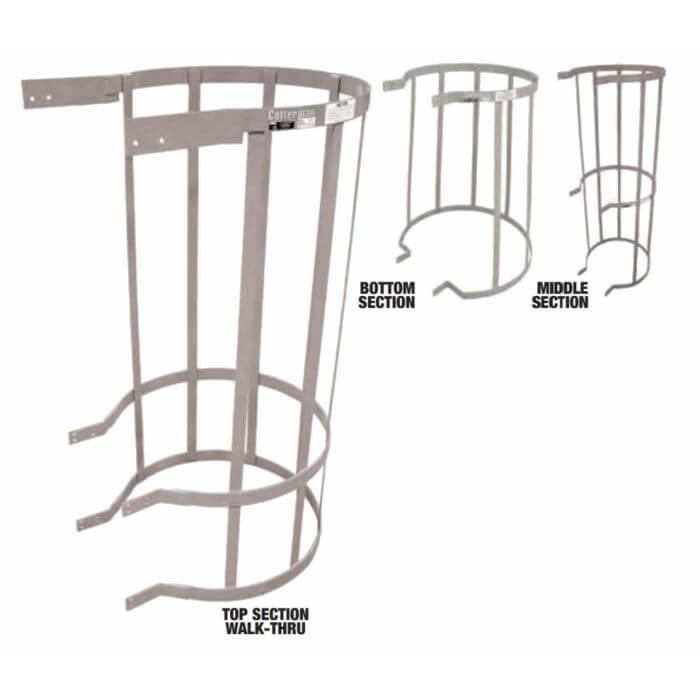
Cotterman Bolt On Modular Ladder Safety Cages
Gray powder-coated paint finish Modular bolt-on ladder cages help make existing fixed ladder OSHA compliant. Ladder safety cages mount to the side rails of fixed ladders up to 20" wide. Top and middle sections have a 29" inside diameter; bottom section flares to a 34" inside diameter for easy entry. Include mounting hardware for flat or angle side rails.
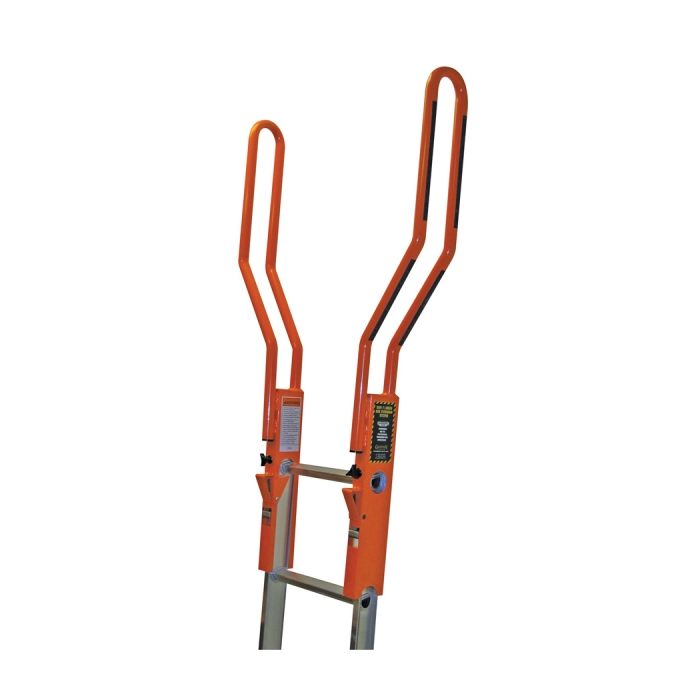
Guardian 10800 Safe-T Ladder Extension System
The Guardian Fall Protection Safe-T Ladder Extension System is designed to attach to the top of a ladder to provide a safe and easy transition from the ladder to a raised surface. It requires no tools, drilling, or bolting to install, and is one of the most effective means of improving the safety of nearly any ladder. Once installed, it provides 2 offsetting handrails that offer a point of walkthrough to step on or off the ladder.
- Designed to attach over the top of the ladder and provide a safe and easy transition from the ladder to a second surface
- Requires no tools, drilling or bolting to hold it securely in place
- The unit provides two offsetting handrails
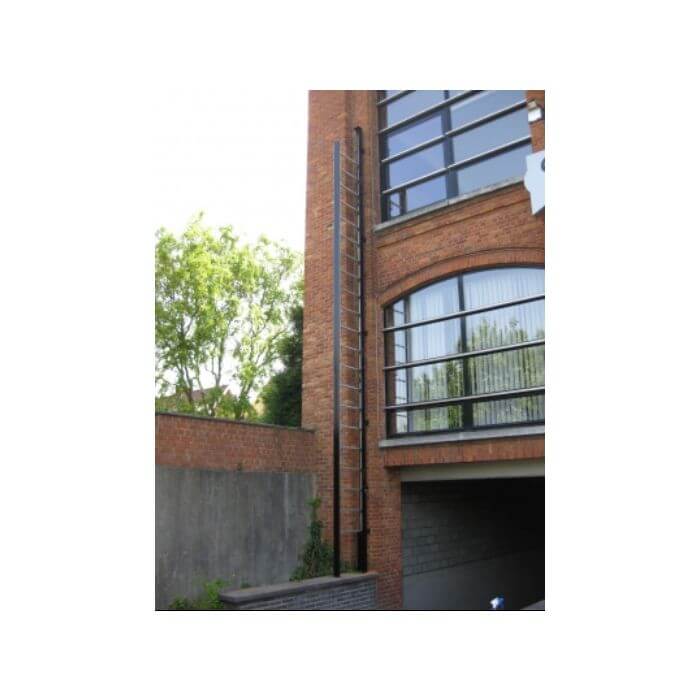
Mini-JOMY Retractable Fire Escape, Access, and Egress Ladder
The Mini-JOMY is a scaled down version of the JOMY Retractable Ladder; specially designed for residential and light commercial applications up to 28 ft. A secondary means of egress for emergency exit or rescue or for permanent roof access on outside walls where space or unauthorized access are concerns. On inside walls, provides access to rooftop hatches while being unobtrusive.
Features
- 20 1/2" wide ladder with slip resistant rungs.
- Ladder extends 26" above the top rung height..
- Made of extruded anodized aluminum and stainless steel.

Metaltech E-SLC3TYW 3-Steps Pro Steel Step Stool with Utility Tray - Type IA - 300 lb Rated
Incorporated utility tray. Anti-slip and large steps for high stability with safety rail for stable work at height. Compact, light, and sturdy make this ladder ideal for house renovation projects.
- Open Dimensions: 19.25 X 27.5 X 52 IN. (48.9 X 69.9 X 132.1 CM)
- Closed Dimensions: 19.25 X 3 X 55.5 IN. (48.9 X 7.5 X 141 CM)
- Weight: 21.2 LB (9.6 KG)
- Material: STEEL AND POLYPROPYLENE

Werner D6200-2 Series - Type IA Fiberglass D-Rung Extension Ladder
The D6200-2 fiberglass ex