

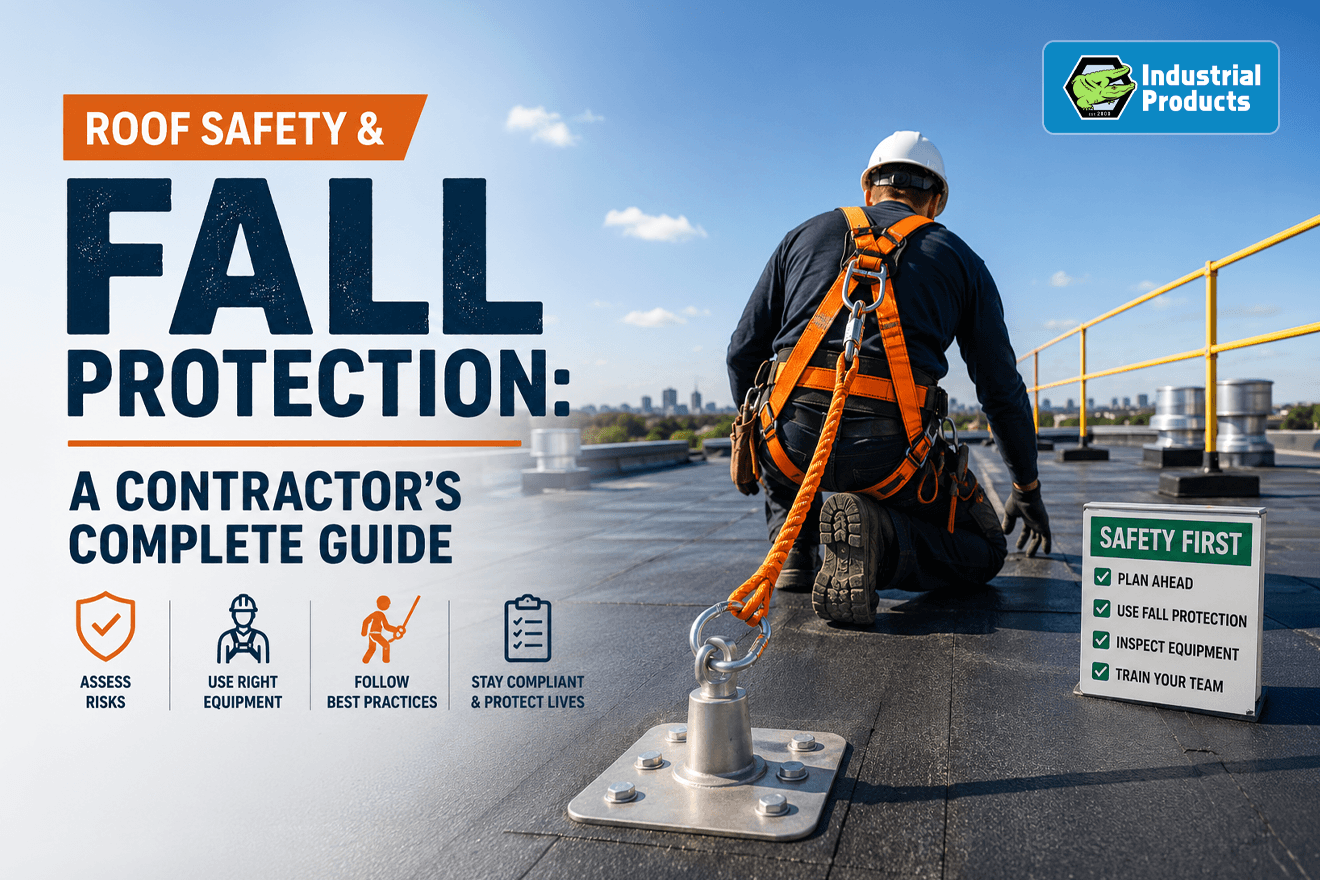
Working on roofs is considered to be one of the highest-risk activities in construction, facilities maintenance, warehouse, and industrial operations. An accident near an unprotected edge, roof hatch, or where the ladder meets the roof can have fatal consequences. For this reason, roof safety planning must not start once the personnel are on the roof. It must start during site assessment, equipment selection, and access planning.
Today’s roof safety devices have been specifically built to limit employee risk to falls, as well as to help the company comply with OSHA regulations. Guardrails, ladder access systems, self-closing gates, warning lines, and roof hatch protection systems are among them.
For contractors, facility managers, and safety officers, the goal is straightforward: reduce fall risks, improve worker access, and maintain compliance without disrupting operations.
This guide outlines the essential product types for securing roof edges, accessing hatches, and working at elevated heights.
Understanding Roof Fall Hazards
Most rooftop accidents happen in predictable areas:
- Unprotected roof edges
- Roof hatch openings
- Ladder transition points
- Skylights and roof openings
- Sloped or slippery roof surfaces
- Areas near HVAC and maintenance equipment
- Temporary work zones without perimeter protection
Workers who perform tasks such as inspection, repair, maintenance, and roofing will usually move in different hazardous zones on the roof throughout the day. Even professionals can be injured when there are no safety measures implemented in the work process.
This is why a proper roof edge guardrail system is important. This measure can prevent people from approaching the roof edge to avoid injury.
Why Passive Fall Protection Systems Are Important?
Passive systems protect workers without requiring active user involvement. Unlike with harnesses and lanyards, workers do not need to remain attached continuously to stay protected.
Common passive systems include:
- Guardrails
- Self-closing safety gates
- Roof hatch railings
- Walkway systems
- Ladder access protection
This will minimize human error, ease movement for workers, and make rooftop maintenance procedures more efficient.
In structures where people have frequent access to the rooftops, installing a fixed roof edge guardrail system is typically the best choice for safety.
OSHA Requirements for Roof Fall Protection
OSHA requires fall protection whenever workers are exposed to falls from elevated surfaces under applicable construction and general industry standards. The type of protection depends on the work activity, roof design, access method, and exposure distance.
Common OSHA-compliant systems include:
- Guardrail systems
- Safety gates
- Warning line systems
- Personal fall arrest systems
- Lifeline and anchor systems
- Controlled access zones
Among these options, passive protection systems, such as permanent guardrails, are widely preferred because they continuously protect workers without requiring active user engagement.
An effective design of a roof edge guardrail system helps establish a physical barrier at the perimeter edges of roofs, which can help minimize the risk of accidents during maintenance.
10 Key Product Categories for Rooftop Safety
A complete roof safety program will depend on the integration of both fixed and movable structural barriers, secure access, and appropriate fall-arrest components. The use of safety measures tailored to the exact characteristics of the roof membrane is key.
Below are ten important product categories engineered to mitigate height-related hazards:
1. Perimeter Guardrails
Perimeter guardrail systems serve as a primary collective barrier, providing passive fall protection for multiple workers simultaneously without requiring active user training or personal harnesses.
They are vital along high-risk perimeters during long-term maintenance projects. Contractors rely heavily on OSHA-compliant roof edge guardrail systems to establish continuous, structural perimeters that withstand standard legal load configurations without requiring structural welding during deployment.
2. Non-Penetrating Safety Railings
For modern buildings with delicate commercial roof surfaces, piercing the membrane to mount safety systems introduces the risk of leaks and structural degradation. Non-penetrating barriers resolve this issue by utilizing modular counterweighted bases.
Implementing a non-penetrating safety railing for flat roofs allows contractors to place highly stable, freestanding edge safety frames on membranes with up to a 5-degree slope without voiding active roof warranties.
3. Roof Hatch Protection Systems
Open roof hatches present severe floor-opening hazards when technicians access a roof deck or leave the hatch open while performing servicing tasks. Safety regulations demand that these internal access zones be fully enclosed.
Integrating a structural roof hatch guardrail with a self-closing gate creates a continuous perimeter around the hatch. The automatic gate system makes sure that the door remains locked once the person has gone through it, whereas the sturdily constructed posts function as handrails for the workers as they climb up to the roof from the ladder.
4. Fixed Access Ladders
Providing safe, permanent vertical climbing routes is essential for accessing elevated platforms, mezzanines, and roofs. Using heavy-duty fixed access ladders for roof hatches ensures technicians have a securely anchored, rigid system for ascending and descending.
Depending on the height at which the structure is used, it may incorporate safety cages or vertical fall arrest systems.
5. Parapet Guardrails
When a building features low structural parapet walls, those walls rarely meet the minimum height requirements specified by safety boards for adequate fall protection. Parapet guardrails clamp directly or mount securely to these concrete or steel structures.
Systems such as parapet wall and floor slab universal guardrails temporarily or permanently raise the perimeter height to compliance levels, utilizing heavy-duty set screws or clamping assemblies that do not compromise the building's exterior fascia.
6. Mobile Fall Protection Carts
When stationary guardrails are impractical due to temporary work paths or shifting construction lines, mobile fall protection carts provide reliable anchorage. These heavy, rolling units can track along flat surfaces near leading edges.
In the event of a sudden fall, an internal braking mechanism or dead-weight friction engagement engages immediately, stopping a contractor's descent without requiring direct structural attachment to the building framework.
7. Self-Closing Safety Gates
Safety openings, ladder access platforms, and elevated floor openings must never be left exposed to human error.
The self-closing safety gates have spring hinges on the inside to ensure that the gate is automatically locked back to its closed position once one passes through the gate. This helps prevent workers from walking backward into the ladderway or hatch.
8. Ladder Safety Gates
Specifically configured for top-rung access, a structural ladder safety gate for roof entries serves as a protective barrier at the entry point of fixed ladders.
It controls pedestrian access and prevents falls into the ladder well. These systems bolt directly onto existing pipe rails or flat structural steel legs, creating an intuitive entry control point that functions reliably in harsh outdoor environments.
9. Skylight Screening and Railing Barriers
Skylights present a hidden danger on commercial roofs, as aged translucent acrylic panel configurations can degrade, crack, and collapse under a worker's weight.
To combat this, safety protocols require placing geometric metal screens or dedicated perimeter guardrail systems around every skylight. These installations ensure that even if a worker slips near a light panel, they will not fall through the fragile material.
10. Warning Line Systems
For large-scale flat roof operations where physical guardrail systems might not span the entire deck, warning line systems provide a highly visible regulatory perimeter.
Positioned at least six feet from the leading edge, these heavy-duty base plates and high-visibility flagged vinyl lines alert workers to a high-risk drop zone and demarcate safe work zones during broad staging operations.
Choosing the Right Fall Protection for Contractors
Selecting fall protection for contractors depends on several site conditions:
Roof Type
Flat roofs, pitched roofs, standing seam metal roofs, and membranes all have their own methods for installation and protection.
Frequency of Access
Permanent systems make more sense when workers access the roof regularly.
Roof Layout
Mechanical equipment, skylights, and hatch locations affect railing placement and access routes.
Weather Exposure
For coastal and industrial settings, corrosion-resistant materials such as galvanized steel and aluminum are needed.
Compliance Requirements
The system should meet applicable OSHA fall protection standards for the work environment.
It is highly advised that risk assessment be conducted before equipment selection.
Inspection and Maintenance Considerations
Even permanent systems require routine inspection.
Safety officers should regularly check:
- Loose railing connections
- Corrosion or rust
- Damaged gates
- Base stability
- Ladder attachment points
- Wear around access areas
Inspections should also confirm that gates self-close correctly and that no unauthorized modifications have been made to the system.
Regular inspection helps maintain compliance and ensures the system performs correctly during daily use.
Take Away
Safe roofs need to be planned properly, have the correct equipment, and have proper access protection. Guardrails, roof hatch access systems, ladder access control, and non-penetrating guardrail systems are some of the ways to prevent falls. Choosing the right system depends on roof layout, worker access frequency, and OSHA requirements.
Companies seeking rooftop safety equipment and access protection solutions can find a wide range of industrial fall protection systems from Industrial Products, for warehouses, manufacturing facilities, commercial buildings, and rooftop maintenance applications.
FAQs
1. What is roof fall protection?
Roof fall protection is the use of devices that keep workers from falling while carrying out work on the roofs. Some of these include guard rails, safety gates, ladder fall protection, a harness system, and roof hatch railings.
2. Why is fall protection important in roofing work?
Falls are considered among the most significant sources of injury or fatality at work sites, such as construction and maintenance areas. Fall protection ensures that safety measures are improved, OSHA compliance is achieved, and better conditions are provided to workers.
3. When is fall protection required on a roof?
OSHA has guidelines that necessitate fall protection for employees where they are faced with falling hazards while working at heights. The guidelines will differ depending on the roof type, the nature of the job being performed, and the surrounding conditions.
4. How often should fall protection equipment be inspected?
It is also necessary for fall protection equipment to be checked periodically before usage and during inspection. Guardrails, ladders, and gates must be checked periodically for maintenance purposes.