
Chain Hoist: Chain Hoist and its Use for Industrial Facility
In an industrial setup, a construction site and a warehouse have the usual operations of lifting and lowering heavy loads and materials; in order to simplify such tasks with ease and precision, the role of a chain hoist comes into the picture. The chain hoist, also known as chain block or tackle, is a simple mechanical device that consists of a chain (sometimes wire rope in some specific model/type) wound around a drum or wheel along a set of pulleys, a hook, or a lifting attachment to lift or lower heavy loads, materials, and products. Some of the types of chain hoists usually feature friction brakes that stabilize loads or material while in descent. In short, all of these chain hoists and types have some style of lifting hook with a self-locking mechanism to secure it while lifting or lowering. Chain hoists are an efficient yet cost-effective mechanism or system for lifting heavy loads frequently. They replace manual lifting as well as reduce workers' fatigue and minimize injuries. Here, we have some of the popular chain hoist brands and different types that one can explore to learn to fulfill the requirements of their facilities.- Sumner
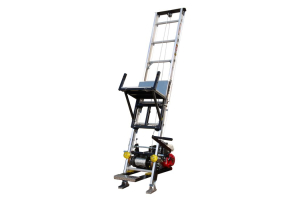
- Shingle hoists
- Vestil Portable Cantilever Hoists
- Vestil Crane and Hoist Drum Lifters
- Genie Super Hoist Pneumatic Material Lifts
Chain Hoist Function: How Does a Chain Hoist Work?
The chain hoist uses the basic principle of physics known as the multiplication of force that allows workers to lift much heavier loads, which are impossible to lift by hand manually. Just by pulling down on the chain, this multiplication of force effect occurs with the help of the system of gears, pulleys, and sprockets in this mechanism. As the force (by pull) applies to these components of the system, it makes it easier to lift heavy loads or weights and reduces the amount of energy needed to pull, which is difficult when lifting by hand manually.Chain Hoist Application: How to use a Chain Hoist
In essence, chain hoists conserve energy while performing heavy lifting tasks and various loads by using the concept of multiplication of force. It’s a cost-effective and efficient system for use in industrial facilities of different sizes and scales. Let’s understand how to use a chain hoist to lift loads with this step-by-step guide.Step 1 - Attach Device to Anchor Point
The first step is to attach the chain hoist to a solid anchor point before the lifting of loads begins. Usually, most of these lifting hoists have an upper hook placed on top of the gear housing that separates it from the chain to secure this system for lifting. Essentially, this anchor gives the required stability in order for it to work to handle heavy loads while lifting or lowering. So, always make sure that the anchor point used is strong and stable enough to manage the load. One should confirm the same with side mounts, ceiling mounts, trolley systems, and lifting equipment to ensure their capability to withstand the weight before lifting. Here, we have one more thing to be taken care into consideration: the positioning of the hoist over the load itself, as well as ensuring there is enough room to lift or pull with ample slack of the chain hoist to reach the sitting load while it approaches.Step 2 - Secure the Load to the Chain
Once the chain hoist is secured, move to attach the lifting hook to the load that needs to be lifted. Always ensure that there is enough safe place available to attach the lifting hook to the load so it can be grabbed safely. Plus, always make sure and cross-check whether the hook is properly engaged to prevent accidental slip-off during the lifting process or at any height.Step 3 - Pull the Chain and Hoist up the Load
Now, here we are at the last step, where we are ready to lift the loads. Once the device and the load to the chain hoist both get secured properly, the load will be pulled up with the help of a lever or with hands. One needs to make sure to keep a close eye on the movement of the load in case the load gets uncontrolled swings or sways. It is recommended to use any available load-bearing aids or taglines to get control over the load's movement and always keep communicating with any colleagues with proper coordination and safety while getting assistance in the load movement or lifting. Make sure to have a decent grip over the device and keep a steady and controlled way of pulling all the time while lifting. Once it reaches the desired height, then it is time to lower the load; simply let up the grip slightly to release the chain. Always make sure not to let go of the device while lowering it as it may damage the load or harm workers around. Release the chain gently to prevent rapid descent, and the job is done.Conclusion
Chain hoists are designed to use mechanical power with our hands, as there is no electricity involved, and they can be easily used without any electricity consumption. Industrial setups where lifting and moving loads and heavy objects for material handling are a common scenario daily need a cost-effective, efficient, and versatile solution for lifting loads frequently; chain hoists are the answer for all these concerns. Yet, getting a chain hoist installed at your facility is incomplete without learning ‘how to operate a chain hoist’, so here we have shared a step-by-step guide for safe and efficient chain hoisting. However, it is always recommended to consult an expert to learn details about operating chain hoists and go for required training to ensure the safe and effective use of this valuable lifting tool. Different types of chain hoists are available in the market, which you can explore and order online. Thanks to the eStore of Industrial Products, on their eStore, they showcase the latest and industry’s best brands of chain hoists with different features to meet your unique business needs. Enjoy the ease of shopping online and get it delivered quickly from Industrial Products.Browse Different Chain Hoists Products:

Sumner 787408/PCB100C10 - 1 Ton Premiun Chain Hoist with 10' Chain Fall
Sumner's Premium Chain Block Hoists' low headroom design is ideal for your 1/4-20 ton lifting needs. Meets ANSI/ASME, OSHA, and CE Hoisting Standards.
Features:
- Meets all ANSI/ASME, OSHA, and CE Hoisting standards
- Fused Brake Design
- 360˚ Alloy Steel Hooks

Sumner 787416/PCB200C10 - 2 Ton Premiun Chain Hoist with 10' Chain Fall
Sumner's Premium Chain Block Hoists' low headroom design is ideal for your 1/4-20 ton lifting needs. Meets ANSI/ASME, OSHA, and CE Hoisting Standards.
Features:
- Meets all ANSI/ASME, OSHA, and CE Hoisting standards
- Fused Brake Design
- Heat Treated Load Plates and Internal Components

Sumner 787448/PCB100C10WO - 1 Ton Premium Chain Hoist with 10' Chain Fall and Overload Protection
Sumner's Premium Chain Block Hoists' low headroom design is ideal for your 1/4-20 ton lifting needs. Meets ANSI/ASME, OSHA, and CE Hoisting Standards.
Features:
- Overload Protection
- Fused Brake Design
- 360˚ Alloy Steel Hooks

Vestil Portable Cantilever Hoists
The Portable Cantilever Hoist is a swivel crane for side loading for controlled lowering. The Hoist has outriggers to increase stability with a counterbalanced / cantilever design. Adjustable extendable boom swivels. Double acting hydraulic hand pump. Available with or without counter balancing ballast.

Vestil Crane and Hoist Drum Lifters
The Crane/Hoist Drum Lifter has an automatic mechanical operation. Great for positioning, drums in and out of overpacks. Steel construction with spring loaded arms for safety. Accommodates steel, plastic or fiber drums. Overall dimensions are 16"W x 9-1⁄2"L x 21-1⁄2". Drums weighing over 500 lbs. must have top lid secured before lifting.

Genie Super Hoist Pneumatic Material Lifts
The Genie Super Hoist penumatic material lift is your ultimate solution for lifting heavy loads with ease and precision. Whether you're positioning metal ducts, installing overhead sprinklers, or setting up electrical fixtures, the Genie Super Hoist is designed to make your job seamless and efficient.