
Every roofing job relies on moving materials from the ground to the roof quickly and safely. When equipment limits your capacity, creates awkward staging areas, or requires constant moving, you lose time. Instead of relying on your tools, your crew ends up working around them.
You rarely pick a shingle hoist as a standalone piece of gear. You need to look at capacity, ladder sections, power sources, and platform types as a complete package. A hoist with great lifting power won't help much if the ladder is too short or the platform doesn't fit your materials. This mismatch causes staging delays and forces your team to do more heavy lifting by hand.
Most experienced crews build their hoist setups around the work they do every day. Good planning accounts for how many bundles you move, where you access the roof, and how often you need to move the equipment. When you keep materials moving smoothly, your team can focus on installing shingles instead of fighting with the machinery.
How to Choose the Right Shingle Hoist Capacity
How Lift Capacity Affects Material Flow
Lift capacity is the biggest factor in how fast materials reach your roof. Think of capacity less as a raw number and more as your speed limit. The number of bundles you lift at once, how often you stage materials, and your total lift cycles decide if your hoist speeds you up or slows you down.
Bundle Count, Lift Cycles, and Staging
If you use a lower-capacity hoist, you have to make more trips. This interrupts your workflow. Your crew spends more time waiting for materials to arrive than actually nailing them down.
Why Higher-Capacity Hoists Reduce Delays
Many crews choose higher-capacity hoists to keep materials flowing, even if their average load falls below the maximum weight limit. Doing fewer lifts means less crowding on the ground and less repositioning. Just remember that heavier-duty systems take more effort to move and set up. You want to find the right balance between lifting power and easy transport, especially if you jump between different sites quickly.
Selecting the Correct Shingle Hoist Height
Matching Hoist Height to Your Rooflines
While a taller roof does not change how you lay shingles, it changes how your equipment handles. Ladder sections that stretch past normal heights add extra weight, take longer to set up, and need more adjustments.
Modular vs. Fixed Ladder Sections
Your choice of lift height should match your typical jobs. Modular ladder sections give you the flexibility to adapt to different roof heights. On the other hand, fixed-length setups save you time on assembly if you work on similar houses every day.
Transport and Storage for Tall Systems
If you move your equipment every day, think about how it fits in your truck. Picking a lift height that fits your daily needs keeps your workflow steady and cuts down on setup time.
Electric vs. Gas-Powered Shingle Hoists
When Electric Shingle Hoists Win
The power setup at your job site often makes this choice for you. If you have reliable electricity, electric shingle hoists are fantastic. They are perfect for residential neighborhoods because they run quietly and offer smooth, predictable lifts all day long.
When Gas-Powered Hoists Make Sense
If you cannot count on site power, you need a gas-powered shingle hoist. Gas engines work anywhere. You do not have to worry about extension cords or finding an open outlet.
Power, Noise, and Runtime
Keep in mind that gas engines weigh more and require fuel. This matters if you have to move the hoist multiple times a day. Your choice comes down to what the site allows, how often you lift, and what keeps your crew moving without stops.
How Shingle Hoists and Ladders Work Together
The Ladder's Role in Moving Materials
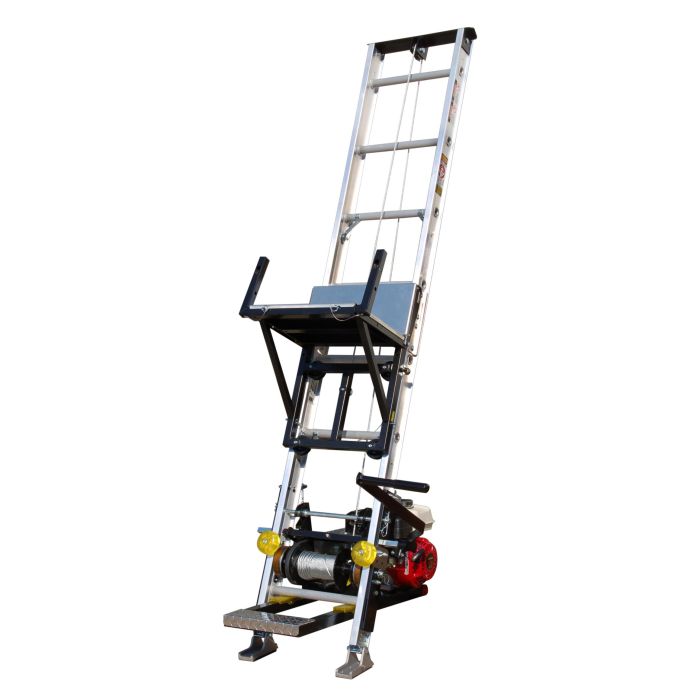
Your ladder and hoist must work as a team. The ladder creates the track from the ground to the roof, while the hoist handles the heavy lifting. You cannot just look at the hoist motor; you have to treat both parts as one complete machine.
Why Compatibility Matters
Your hoist and ladder sections must fit together perfectly. A poor fit slows down your lifting speed, reduces your safe working height, and forces you to make constant tweaks.
Setup Mistakes That Slow You Down
Smart crews choose a setup that fits their most common roof access points. When you match your hoist to your ladder correctly, materials flow without a hitch, saving you headaches once the work starts.
Stability on Steep or Uneven Rooflines
The slope of the roof and the condition of the ground change how your hoist acts. When you work on steep slopes or rough ground, keep an eye on these factors:
- Load Balance: As the load moves higher, small shifts feel much bigger.
- Ground Contact: Ladders sit differently on soft dirt than they do on flat concrete.
- Weight Transfer: Repeated lifting can throw off how smoothly the platform moves up the track.
- Hidden Issues: Moving materials around the roof often reveals alignment problems you missed during setup.
In these conditions, safety depends on how well the hoist stays planted over dozens of trips, not just on the first lift.
Portability and Repositioning
How Weight Impacts Productivity
Your equipment does not sit still for long. As you finish roof sections, you must move the hoist to new access points. Every move adds up to lost time.
Breakdown, Transport, and Reassembly
The weight of the motor, the size of the pieces, and how fast it comes apart determine how easily you can move your system. Gear that is easy to move keeps your crew productive.
Why Portability Beats Speed
Over the course of a long week, a hoist that is easy to move will save you more time than a hoist that lifts a few seconds faster.
Accessories That Expand Your Options
Platforms for Plywood and Sheet Materials
You lift more than just shingles. Crews use special accessories and platforms to move plywood, solar panels, and awkward loads. Pick accessories based on what you lift most often.
Expanding Your Setup
Brands like Tie Down offer accessories that let you do more without buying a whole new hoist. Platform extensions and material carriers help you lift different items safely while keeping the same smooth track.
- Matching Setups to Repeat Jobs
- When you do the same type of roof every week, you find a rhythm. Crews that handle similar houses quickly learn which setups work best.
- Standard setups cut down your morning assembly time.
- Keeping things consistent helps your crew know exactly when the next bundle will arrive.
- If your jobs vary wildly, you need a flexible setup that adapts easily.
- Your crew size dictates who runs the hoist and who catches the materials. Matching your hoist to your daily routine keeps everything predictable and safe.
Final Thoughts
When you look closely at how hoists perform on real roofs, your choices actually become simple. It is all about finding a setup that fits the way your crew naturally works. A great shingle hoist acts as a reliable partner. It keeps materials flowing quietly and safely without begging for attention or repairs.
At Industrial Products we bring these options together. We offer top-tier shingle hoists and accessories that fit your daily grind. Having the right tools means you can work your way, instead of forcing your crew to learn a clunky new system.
FAQs
1. What are the different types of roofing shingle hoists?
They usually feature a ladder track combined with a platform. You can power them with electric motors, gas engines, or manual winches, depending on what your site needs.
2. Is a shingle hoist better than a ladder hoist?
They are the same system. The ladder acts as the track, and the hoist mechanism pulls the materials up. They work perfectly together.
3. How much weight can a roofing shingle hoist lift?
It depends on the model, but most are rated to handle heavy bundles of shingles, rolls of underlayment, and plywood sheets with ease.
4. Are roofing shingle hoists safe to use on steep roofs?
Yes, as long as you set them up right. Safety on steep roofs comes down to solid ground placement and securing the ladder properly at the roofline.
5. What is the difference between electric, gas, and manual hoists?
Electric models need a steady power source. Gas models go anywhere but need fuel and make more noise. Manual hoists require your physical strength, making them best for light-duty tasks.